
MOTUS Rollout Issues

FMCSA MOTUS Rollout Challenges Update


Earlier this month, the Federal Motor Carrier Safety Administration (FMCSA) officially launched Motus; its new USDOT Registration System designed to modernize carrier registration and oversight. According to FMCSA the platform is intended to “strengthen oversight, reduce fraud, improve efficiency, and better serve America’s trucking industry” by replacing a patchwork of legacy systems with a centralized registration platform.

The goals behind the rollout are significant. FMCSA Administrator Derek D. Barrs described the legacy system as fragmented and vulnerable to fraud, noting that multiple disconnected applications created blind spots that allowed unsafe or fraudulent operators to evade oversight. FMCSA has stated that several thousand suspicious registration numbers were linked to potentially fraudulent carriers under the previous system.   However, as with many large-scale technology transitions, early adoption has not come without challenges.

Industry organizations and carriers have reported system strain during the initial rollout, including difficulties claiming USDOT numbers, account access concerns, and registration visibility issues. Supporting companies and c/TPAs are also navigating the transition away from FMCSA Portal registration functions and the need to reconnect and reauthorize access for individual authorities. FMCSA had previously announced that registration activity would transition away from legacy portal functionality as Motus launched.

Some issues have been more frustrating than operationally significant; and even occasionally humorous. One Lee Trans user encountered facial recognition verification trouble after a few days of facial hair apparently no longer matched last year’s freshly shaven driver’s license photo. But for new carriers establishing authority or smaller operators without third-party support, delays and access complications can have a direct operational impact.   At the time of this printing, c/TPAs are unable to submit MCS-150 filings for new carriers, supplements or biennial updates.  We are monitoring closely and working with FMCSA to resolve access issues.

FMCSA has emphasized that Motus represents a long-term modernization effort and will continue evolving through future phases and system enhancements. In the meantime, carriers experiencing registration difficulties can contact FMCSA support through live chat Monday–Friday from 8:00 a.m.–8:00 p.m. EDT, by phone at 1-800-569-1675, or through registration support channels listed on FMCSA’s website.

As with any major systems overhaul, the transportation industry may experience some short-term growing pains, but stakeholders across the industry will be watching closely to see whether the long-term promise of reduced fraud and streamlined registration delivers on expectations.


From our President; Jackie Polk, CTP:

Please join me in congratulating our well-deserving Employee of the Month, Laureen Voirol. Recognized not only by our team but by her clients, who took the time to personally share their appreciation for her responsiveness and the exceptional service she provides. With 7½ years in a client service role, Laureen consistently demonstrates professionalism, attentiveness, and an ability to think quickly and effectively in any situation. Laureen also brings a genuine sense of care to those around her—her faith is evident in the way she supports others, often offering prayer and encouragement. We are grateful for the positive impact she continues to make on both our clients and our team.

Second-Quarter Reminders and Preparing for HVUT / 2290 Filing Season

As we move into May, many carriers begin shifting attention toward mid-year filings and renewal preparations. One of the most important items during this period is ensuring the Heavy Vehicle Use Tax (HVUT) — Form 2290 — will be filed accurately and on time in the months ahead.

For fleets operating vehicles 55,000 pounds and above, HVUT obligations are annual and often become especially relevant mid-year. The filing window opens this month, and closes June 30th.  Now is the ideal time to begin gathering necessary information and reviewing your fleet composition. Early preparation helps avoid processing delays, errors, or issues acquiring your stamped Schedule 1 when registrations and renewals come due.

Our Licensing & Permitting Specialists are already preparing for this filing season. They are reviewing unit lists, confirming weight classifications, and tracking prior-year filings to ensure that every carrier’s submission is complete, accurate, and aligned with IRS requirements. This proactive work helps ensure a smooth, organized, and compliant filing process when the time arrives.

Nearing a mid-point in the year, it’s also a good opportunity for carriers to review any changes to equipment, fleet makeup, or operations that may impact your 2290 filing. Confirming current asset data now helps ensure that the upcoming submission reflects your most up-to-date operations — reducing risk and avoiding surprises later.

As always, our team is focused on maintaining harmony between regulatory demands and operational realities. Through careful planning, organized workflows, and attention to detail, we continue to provide dependable support so carriers can focus on what matters most: safe, efficient operations.

Wishing you a steady, and productive start to summer,

Crystal Chaviers

Client Services Supervisor

Memorial Day

Today we pause to honor and remember the brave men and women who made the ultimate sacrifice in service to our country.

Memorial Day serves as a reminder that freedom carries a cost, and behind every flag flown and gathering shared are individuals and families whose sacrifices helped shape the communities we live and work in today.

As many spend time with family and friends this holiday weekend, we encourage everyone traveling to do so safely and take a moment to reflect on the spirit of service, dedication, and selflessness that this day represents.

From all of us at Lee Trans, we extend our gratitude and remembrance to those who gave everything in service to our nation.

For years over 80 years Emkay has helped organizations simplify fleet management through vehicle leasing, fleet services, and strategic support that helps companies keep operations moving efficiently. Behind every successful fleet is a network of trusted partners working together—and we’re honored to support Emkay clients with transportation compliance solutions that help strengthen safety and reduce administrative burden.

Strong partnerships create stronger fleets. By combining industry expertise with practical solutions, we’re able to help organizations navigate the moving parts behind fleet operations with confidence.

Interested in learning more about our affiliate relationships and integrated solutions? Connect with our Sales team to start the conversation.

Please note our offices will be closed Monday, May 25th, 2026 in observance of Memorial Day. We will reopen on Tuesday, May 26th, 2026.

From our President; Jackie Polk, CTP:

Latisa Jenkins is our Clean Desk Award recipient, and this recognition reflects far more than just a tidy workspace. Latisa consistently manages an impressive volume of work with accuracy and timeliness, which speaks to her strong organizational skills and disciplined work ethic. Despite the pace, she always maintains a positive attitude—approachable, friendly, and patient with both clients and team members. She listens carefully, communicates thoughtfully, and is always willing to step in and help wherever needed. Her workspace is truly neat as a pin, but more importantly, it mirrors the structure, care, and professionalism she brings to her role every day. Congratulations, Latisa!

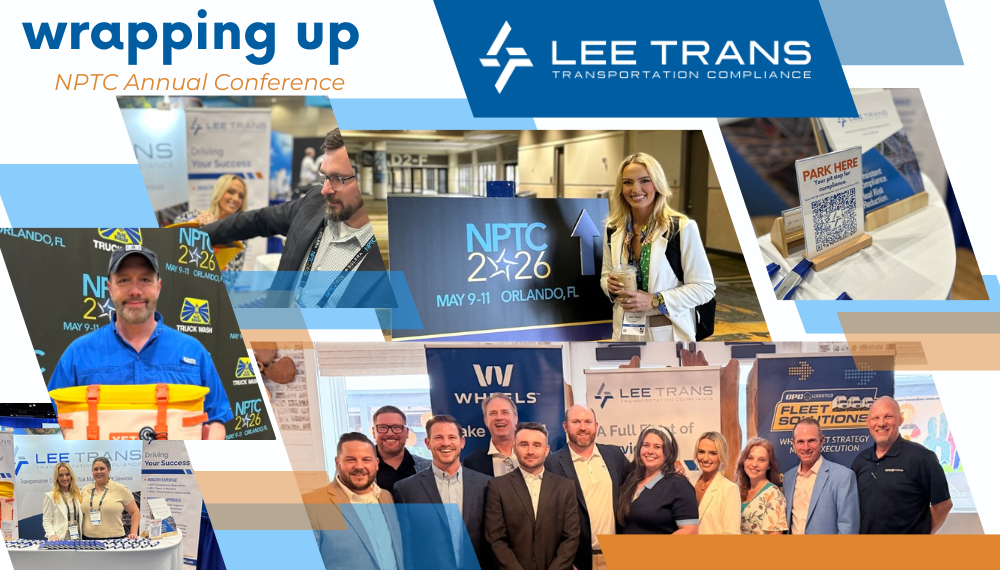
NPTC Wrap Up

Earlier this month our team was on the road to Orlando for the National Private Truck Council’s Annual Conference. As always, NPTC hosted an incredible event showcasing speakers across the industry, sharing insight and engaging with fleet leaders.

Didn’t get a chance to stop by our booth to learn about how Lee Trans can support your DOT Compliance needs? Visit www.leetrans.com to learn more and schedule your free demo today!

When people think of DOT-regulated passenger transportation, they often picture large charter companies or commercial bus lines. What many organizations don’t realize is that student transportation can create regulatory exposure too; even when transportation is only a small part of the services they provide.  School districts, activity buses, church youth programs, daycares, nonprofit organizations, and after-school programs frequently provide transportation for students beyond the traditional route-to-school setting. Whether it’s transporting students to athletic events, field trips, educational outings, camps, or extracurricular activities, these operations can fall into a category many organizations never expected: passenger-carrying commercial motor vehicle operations.

One of the most commonly overlooked triggers is passenger count. Under federal definitions, a vehicle designed or used to transport more than 8 passengers (including the driver) for compensation, or more than 15 passengers including the driver when not for compensation, may meet the definition of a commercial motor vehicle. That “for compensation” language can create confusion because many organizations assume it only applies to direct ticket sales or transportation fees.  In reality, compensation can be broader than many expect. An indirect fee or benefit tied to transportation may still create exposure. For example, a daycare that includes transportation as part of tuition, an assistance program where transportation is built into service fees, or a nonprofit group transporting participants as part of membership costs may unintentionally cross into regulated territory. Transportation may not be the organization’s primary business but if it supports a paid service, regulators may still evaluate the operation differently.

The same questions can arise when organizations use chartered transportation. Hiring buses for student travel, extracurricular events, or large group activities may create assumptions that compliance responsibility automatically shifts elsewhere. While charter providers maintain their own obligations, organizations coordinating transportation should still understand operational responsibilities, documentation expectations, and vendor oversight considerations.

Adding to the complexity, many activity drivers wear multiple hats. A coach may also drive students to an athletic event. A teacher may transport students for academic competitions. A daycare employee may oversee both childcare and transportation responsibilities. In many of these situations, individuals do not think of themselves as “commercial drivers,” yet the regulations may view the activity differently.  Hours of service, driver qualification files and drug & alcohol testing can impact employees whose primary job role is not a driver, but who shift into that role only when needed.

Transportation requirements can become even more complex when trips extend beyond routine daily routes. Depending on the state where travel originates or whether transportation crosses state lines, regulatory obligations can shift significantly. Some states adopt requirements for intrastate passenger operations that differ from federal standards, while interstate travel may trigger additional federal oversight. Unfortunately, there is no centralized federal database that outlines every state-specific transportation requirement in one place. Organizations are often left navigating a patchwork of rules that can vary by passenger count, vehicle type, trip purpose, and jurisdiction.

For student transportation programs, that means a bus used for local activities one day and an out-of-town event the next could potentially operate under different expectations. Understanding where regulations begin and end is often one of the most difficult parts of managing these operations; particularly for organizations where transportation is only one piece of their broader mission.

The goal is not to create concern – it’s to create awareness. Understanding whether passenger count, vehicle design, compensation structure, or trip purpose affects your operation can help organizations make informed decisions and avoid surprises down the road.  At Lee Trans, we work with organizations that never expected transportation regulations to apply to them. Through consulting, driver qualification support, and compliance program development, we help fleets better understand their exposure and create practical programs that fit their operation. To learn more about how we support hidden fleets and passenger transportation programs, visit leetrans.com.

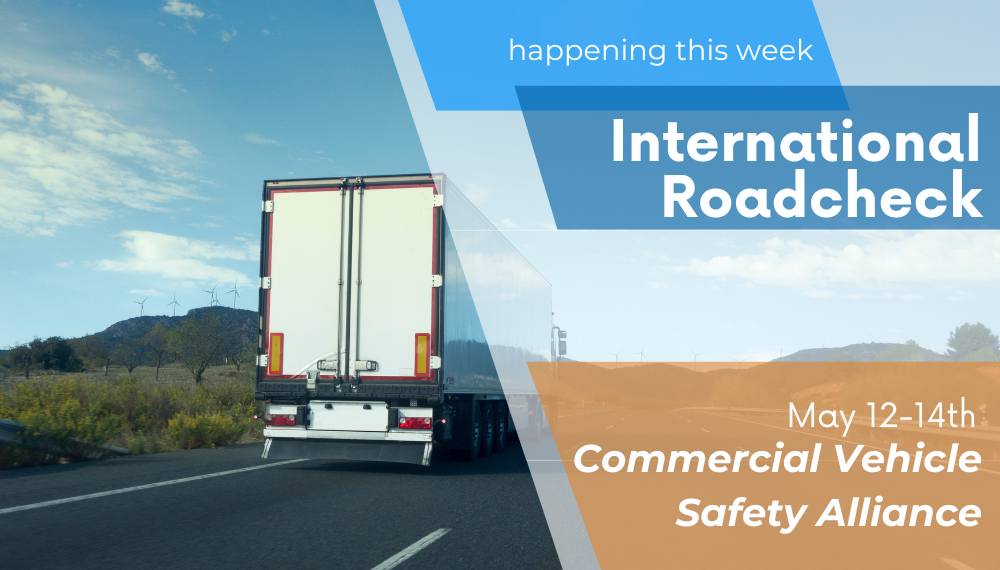
The annual CVSA International Roadcheck is set to take place May 12–14, bringing increased inspection activity across North America.

This year’s focus areas include driver record of duty status (hours of service) and tire condition and maintenance – two critical components of both safety and compliance. Inspectors will be paying close attention to log accuracy, supporting documentation, and signs of tire wear, damage, or improper inflation.

For carriers, this is more than a three-day event; it’s an opportunity to evaluate readiness, reinforce best practices, and ensure both drivers and equipment are prepared for inspection.

At Lee Trans, we encourage fleets to take a proactive approach. Reviewing logs, addressing maintenance items, and confirming documentation is in order can make a meaningful difference not just during Roadcheck, but year-round.