Operational Clarity, Asset Management, and Strengthening the Second Half of the Year

As we reach the midpoint of the year, it’s a natural moment to take a step back and evaluate how our operational goals are aligning with the needs of the carriers we support. The first half of 2026 has moved quickly, and many organizations are already refining workflows, pacing their compliance tasks, and preparing for the demands of the second half of the year. In Operations, this is where our focus is strongest: creating clarity, reducing inefficiencies, and ensuring the systems you rely on remain dependable and predictable.

A key part of that stability comes from how fleets track, monitor, and maintain their assets. This is why our Asset Management services through fleetkeep have continued to play such an important role for carriers this year. Effective asset tracking isn’t just about keeping records—it’s about ensuring that every unit in a fleet has the documentation, inspection history, and renewal timelines needed to stay compliant and road-ready.

Through fleetkeep, our team helps carriers maintain visibility over their equipment in a way that is accurate, organized, and easy to follow. Whether it’s monitoring upcoming expirations, tracking inspection schedules, or ensuring documentation is available and audit-ready, the goal is to eliminate the guesswork that often leads to missed deadlines or preventable violations. When assets are managed well, the entire operation runs more smoothly.

Internally, our Operations team has spent the first half of the year refining processes that support those services. We’ve continued to focus on communication flow, clarity in expectations, and ensuring each department has the structure needed to support clients consistently. These improvements may not always be visible from the outside, but they are foundational to providing the level of service and reliability our clients expect.

As we look ahead to the remainder of the year, our priorities remain simple: strengthen the systems that work, remove friction where it appears, and continue supporting carriers in ways that keep their operations confident and compliant. The work your CSR and our operations staff do behind the scenes is intentional, and we’re committed to carrying that same momentum into the second half of 2026.

Wishing you a safe, steady, and productive continuation of the year.

Brandon White

Director, Operations

Yesterday kicked off Operation Safe Driver Week with the CVSA! This year’s focus is preventing unsafe driving behaviors.

From CVSA: The goal of this weeklong safe-driving enforcement and outreach initiative is to improve drivers’ behaviors through education, traffic-enforcement strategies and driver interactions with law enforcement. Driver-related behaviors are largely preventable; therefore, addressing these behaviors is one of the most effective ways to reduce injuries, save lives and improve overall road safety.

Read more at cvsa.org/news/2026-osd-week/

Learn with Lee Trans

Owner Operators: Independence Doesn’t Mean Exemption   

Independence has its rewards. For many drivers, becoming an owner operator represents the freedom to run a business on their own terms. But when it comes to DOT compliance, independence doesn’t mean exemption. Many of the same federal safety regulations that apply to large motor carriers also apply to a fleet of one, making it essential for owner operators to understand not only how to operate safely, but also how to maintain the records and programs required by the Federal Motor Carrier Safety Administration (FMCSA).

You’re Not Just the Driver—You’re the Motor Carrier

Becoming an owner operator means wearing many hats. Beyond driving safely, you’re responsible for maintaining required documentation, monitoring deadlines, understanding regulatory changes, and ensuring your operation remains compliant year after year.  If you operate a commercial motor vehicle in interstate commerce that meets the definition outlined in 49 CFR §390.5, you’re responsible for understanding and complying with the regulations that govern your operation. While you may not have a safety department or compliance manager behind the scenes, the Federal Motor Carrier Safety Administration (FMCSA) still considers you responsible for maintaining the records, programs, and documentation required of a motor carrier.

Many owner operators spend years developing their driving skills before starting a business of their own. What often comes as a surprise is that operating a regulated motor carrier involves just as much work behind the wheel as it does behind the desk. Without organized systems and processes, administrative responsibilities can quickly become overwhelming.  The challenge is that compliance responsibilities do not always arrive at convenient times. Annual reviews, expiration dates, renewals, and testing requirements continue regardless of whether you are hauling a load, managing customers, or maintaining equipment.

Driver Qualification Doesn’t Stop with One Driver

One area that often causes confusion is Driver Qualification. Even if you are both the owner and the driver, the requirements of 49 CFR Part 391 generally still apply. That includes maintaining a compliant Driver Qualification File containing items such as your driver’s application, medical certification, motor vehicle records, and annual certification of driving record. It’s easy to assume these requirements are intended for larger fleets, but during an audit, an owner operator may still be asked to produce the same documentation as any other regulated carrier.  If you operate under your own authority, you are responsible for maintaining your own records.

Drug & Alcohol Programs: You Can’t Randomly Select Yourself

For CDL owner operators performing safety-sensitive functions, 49 CFR Part 382 introduces another commonly misunderstood requirement.  While owner operators are responsible for complying with FMCSA’s Drug and Alcohol Testing Program, they cannot conduct their own random testing selections. Under 49 CFR §382.305, CDL owner operators must participate in a compliant random testing consortium or Consortium/Third-Party Administrator (C/TPA). Maintaining consortium enrollment, completing required testing, completing required Clearinghouse queries, and retaining supporting documentation are all important parts of remaining compliant.

Hours of Service:  The Rules Still Apply When You Own the Truck

Whether you own the truck, lease to another carrier, operate under your own authority, or contract your services, Hours of Service (HOS) requirements under 49 CFR Part 395 may apply to your operation. Owner operators must understand when Electronic Logging Device (ELD) requirements apply, when a short-haul exception may be available, and what documentation is required to support an exemption. These exceptions are not automatic—they require specific operating conditions and recordkeeping practices to remain valid.

As both the driver and the motor carrier, owner operators carry the responsibility of ensuring their logs are accurate, their records are maintained, and their operation remains within regulatory limits. HOS compliance is not just about avoiding violations; it is about protecting yourself, your business, and everyone sharing the road.

Running the Business Behind the Wheel

Compliance extends far beyond qualification and maintenance.  Depending on how your business operates, you may also be responsible for maintaining operating authority, Unified Carrier Registration (UCR), International Registration Plan (IRP) credentials, International Fuel Tax Agreement (IFTA) reporting, vehicle titling and registration, insurance filings, and other federal or state reporting requirements.  The programs that apply depend on several factors, including:

  • Whether you operate interstate or intrastate
  • Vehicle weight and configuration
  • The commodities you transport
  • Whether hazardous materials are involved
  • The states in which you operate

As your operation changes, so can your compliance responsibilities.

Compliance Extends Beyond FMCSA

Although FMCSA regulations receive the most attention, they represent only one part of the transportation compliance landscape. Owner operators hauling hazardous materials may also fall under the jurisdiction of the Pipeline and Hazardous Materials Safety Administration (PHMSA). The Hazardous Materials Regulations (49 CFR Parts 171–180) establish requirements for shipping papers, packaging, marking and labeling, employee training, security plans, registration, and emergency response information.

State requirements may also apply, including registration programs, permits, inspections, and operational requirements that vary by location and type of operation.  Because transportation requirements are spread across federal agencies, state agencies, and industry-specific programs, staying compliant requires ongoing monitoring and understanding how multiple requirements interact.

Audit Readiness Isn’t Just for Large Fleets

One of the biggest misconceptions among owner operators is the belief that small carriers are unlikely to be audited.  In reality, FMCSA compliance reviews, New Entrant Safety Audits, investigations, and post-crash reviews can involve carriers of any size. During these reviews, regulators evaluate whether required records have been maintained—not whether the carrier has one truck or one hundred.  Maintaining organized documentation throughout the year makes responding to an audit significantly easier than trying to recreate records after the fact.

Every fleet is different, and so are its compliance responsibilities. That’s why each month, our Learn with Lee Trans series takes a closer look at the regulations, programs, and best practices that help carriers operate with confidence. If there’s a compliance topic you’d like us to cover in a future edition, we’d love to hear from you! In the meantime, if you have questions about your operation or need assistance with any of our compliance services, visit leetrans.com or contact our team. We’re here to help.


July Anniversaries

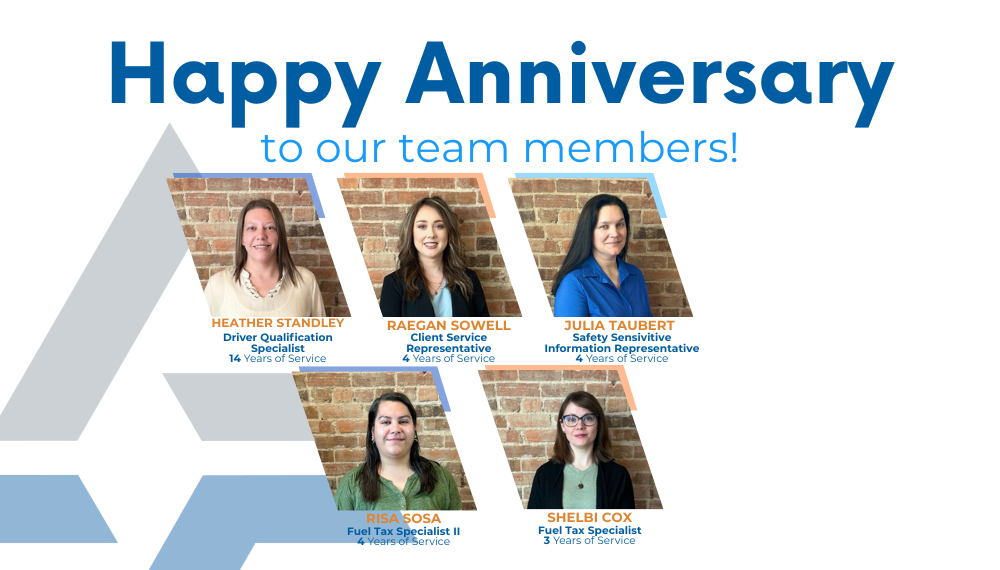
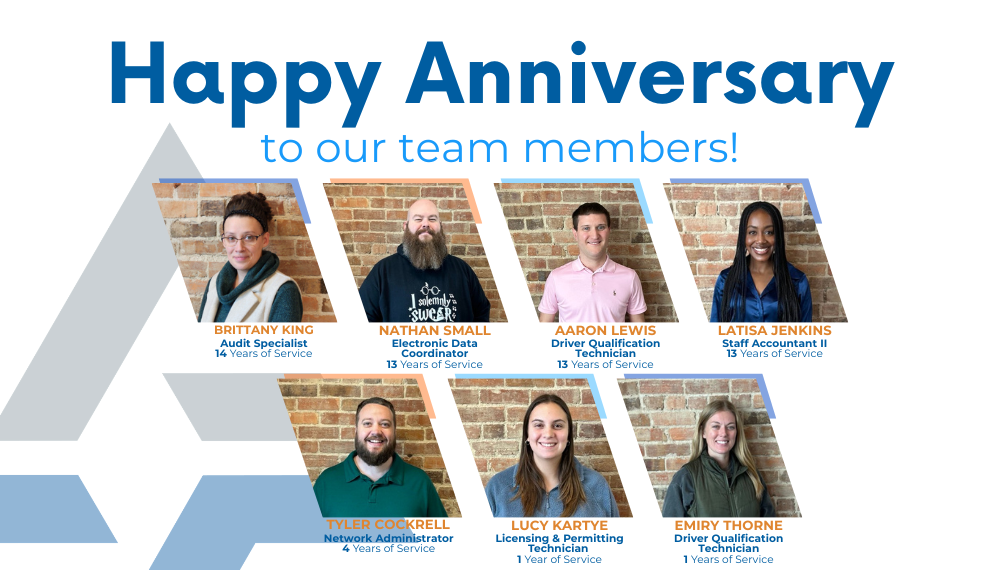
Please join us in celebrating some of our employee milestones this month! Thank you all for your dedication to service and commitment to excellence. We are proud to have you on the team!

#employeehighlights

Innovation, Integration, and Strengthening the Systems Behind Compliance

By the time we reach May, many organizations have a clearer sense of how the year is unfolding—what’s working smoothly, where bottlenecks are forming, and which processes could benefit from better structure or support. This makes spring an ideal moment to look at the systems behind your operations, especially those that connect people, data, and workflow across multiple departments.

At Lee Trans, much of our work in Special Projects centers on building and refining the internal and external systems that keep information moving efficiently and securely. Strong processes aren’t just nice to have; they are what allow carriers to stay confident in their compliance, avoid delays, and reduce the friction that comes from manual work or outdated communication loops.

One area where we continue to make significant progress is the development and improvement of API connections with our industry third party providers. These integrations allow key data—such as MVRs, PSPs, background checks, drug and alcohol testing updates, and licensing information—to flow into our systems more quickly and accurately. When information arrives in real time, it reduces the lag that can lead to onboarding delays or inconsistencies in driver files.

Internally, we are focused on streamlining process flows that impact every stage of the compliance lifecycle. From onboarding to renewals to record maintenance, our goal is to create systems that are intuitive, consistent, and designed to support the way carriers actually work. The more predictable and interconnected these processes are, the easier it becomes for teams to stay organized and audit-ready throughout the year.

We’re also continuing to explore new tools and development projects that will enhance the way information is managed across departments. Innovation doesn’t always mean large, sweeping changes—sometimes the most meaningful improvements come from removing small points of friction, building better visibility, or reducing duplication of effort. These are the quiet efficiencies that keep carriers moving forward.

As we move into the summer months, our team will remain focused on building structures that support accuracy, communication, and long-term scalability. The work may happen behind the scenes, but the benefit touches every carrier we serve.

Wishing you a productive and steady start to the middle of the year.

Justin Sowell

Director, Special Projects

Flag Day

Today we celebrate Flag Day – the annual reminder of our grand old’s history, significance and heritage.

Today is also a good time to retire those flags that have become tattered. The National Flag Foundation has partnered with the National Sheriff’s Association and National Association of Counties to facilitate a flag disposal program, which ensures proper etiquette is followed and community partners like the Boy Scouts, Veterans groups and Sheriff’s departments collect and carry out retirement ceremonies. Read more at https://nationalflagfoundation.org/program-gives-american-flags-respectful-retirement/.

June Anniversaries

Please join us in celebrating some of our employee milestones this month! Thank you all for your dedication to service and commitment to excellence. We are proud to have you on the team!

#employeehighlights

National Safety Month

Today kicks of National Safety Month; starting with FMCSA’s ‘Our Roads, Our Safety Week’. Be on the lookout as they highlight safe driving practices for CMVs, operating guidance for fleets and ways our community can ensure safety on and off the road. From FMCSA: “Our Roads, Our Safety Week is a reminder that safety isn’t a passive condition, but rather a set of daily decisions.”

Learn more at https://fmcsa.medium.com/this-june-road-safety-is-everyones-job-71c9d227039d.

#OurRoadsOurSafetyWeek

Earlier this month we had the honor of sponsoring a hole at the Pineywoods Transportation Club’s 54th Annual Golf Tournament Scholarship Fundraiser. Team members from our IT and Consulting groups hit the greens in support, including Director of IT; Chase Bozeman, Network Administrator; Tyler Cockrell and DOT Consultant; Xavier Richard, Esq.

PTC is an educational nonprofit organization focused on providing resources and support related to transportation education in the Pineywoods region. Lee Trans is proud to support this organization and their continue efforts to highlight the next generation of our industry!

Learn with Lee Trans

How to determine if you’re DOT Regulated

The US Department of Transportation is as simple and complex as any other federal agency.

In simple terms – if something or someone is being transported – it likely is regulated by the DOT. That includes those that specialize in transportation but also companies that are not for hire but transport as part of their daily operations. According to DOT, it’s when the use ‘furthers commerce’, ie, the travel is business related.

To be more specific (or more complex) that travel can fall under multiple agencies under the great umbrella of DOT. There are currently eleven sub-agencies operating within USDOT; all managing a specific mode of transportation or oversight of safety.  Each oversee specific transportation modes and can overlap depending on their specific area of focus. The primary transportation modes defined under USDOT include Aviation, Maritime, Pipelines, Railroads, Roadway and Transit. Essentially if it moves, DOT oversees it.

To further muddy the waters, each of these agencies have specific guidelines and regulatory requirements that sometimes overlap, and companies, cargo or operators can be subject to multiple agencies requirements at once.

For companies unsure if they’re subject to Motor Carrier regulations, FMCSA has a helpful tool that identifies exposure to the regulations. If the company’s operations include travel across state lines (Interstate), the CSA Motor Carrier Safety Planner provides an online guide to helping CMV companies comply with those regulations.

If a company determines they are operating in an Intrastate capacity (not crossing state lines) then they have to look towards the State specific regulatory requirements to determine if the State of their operation requires a USDOT number, or has State-specific definitions of CMV (Commercial Motor Vehicle) operations.  For some states this is called a State Transportation Code.

Unfortunately there is no Federal database that includes all State-specific regulations, exposure or licensure requirements for those impacted companies.  Further adding to the difficulty of staying compliant is that States add or update State Regulatory Requirements on an inconsistent basis, and all have differing requirements on how to report how it may or may not impact companies within their borders. The nuances between Inter and Intra state operations, the State specific regulatory requirements and the multiple agency exposure under the umbrella of DOT all lead to the same repetitive question – what are companies are subject to?

The answer is different for every company. How they operate, where they travel, who or what they haul, and whether there is a direct or indirect payment for that transport all have an impact on how to the answer to that question. At Lee Trans we work with companies reviewing potential exposure by conducting Mock Audits, Operational Reviews and when necessary Due Diligence Checks to ensure our clients know the exact exposure they’re facing and have a gameplan on how to ensure compliance is met from day one.

We see daily how ‘Hidden Fleets’ learn they’re not compliant with Federal requirements after disaster strikes. Or how smaller carriers realize their exposure after they change their operations as they grow. Companies managing their regulatory exposure in-house are tasked with understanding the ins and outs of an agency that has undergone significant changes in the last decade and are posed to propose several new rules in the coming years. I recommend registering for email updates of the Federal Register, to watch for proposed rulemaking, final rules and notices.

In short – there is no clear yes/no answer for companies looking to see if they’re regulated under DOT. A review of their operations is needed, an audit of travel expectations and a cross-audit of the many sub-agencies is warranted to truly understand exposure. Lee Trans works diligently to help Motor Carriers navigate these regulations, implement successful safety programs, and provide the tools and resources necessary to ensure compliance. Contact us at 1-888-569-1675 for assistance.

Full Link Details:

https://www.transportation.gov/research-and-technology/research-mode-transportation

https://www.federalregister.gov/agencies/transportation-department

https://www.transportation.gov/odapc/part40QA/40-3

https://www.fmcsa.dot.gov/usdot-wizard

https://csa.fmcsa.dot.gov/safetyplanner/

https://www.fmcsa.dot.gov/regulations/federal-register-documents?title=&type%5B%5D=PRORULE&topics=All&abstract=All

https://public.govdelivery.com/accounts/USGPOOFR/subscriber/new?preferences=true#tab1