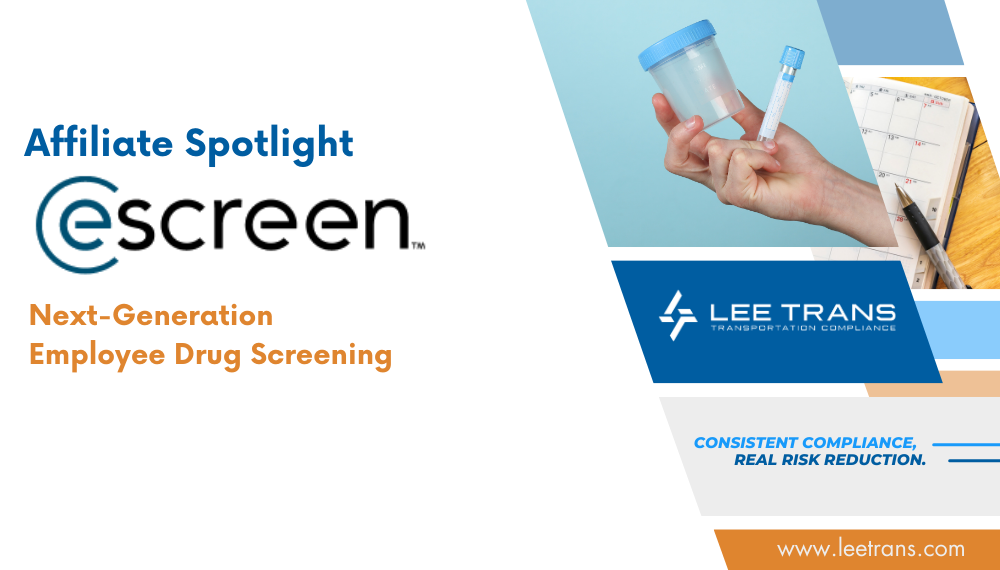
Keeping a DOT drug and alcohol testing program organized can be a challenge—especially when your drivers are spread across the country. We’re proud to work alongside eScreen, whose technology-driven testing solutions help employers manage DOT testing, random programs, scheduling, tracking, reporting, and compliance through an online platform supported by a nationwide network of collection sites.

For carriers, that combination of technology and accessibility can help make a complex process easier to manage. We’re grateful for our relationship with eScreen and the resources they provide to help us better serve carriers wherever they operate.

From hiring to post accident testing, compliance is easier when the process works together.

#PartnerSpotlight #eScreen #DrugTesting #DOTCompliance #Transportation #LeeTrans

Every school day, millions of students depend on school transportation to get them where they need to go safely.

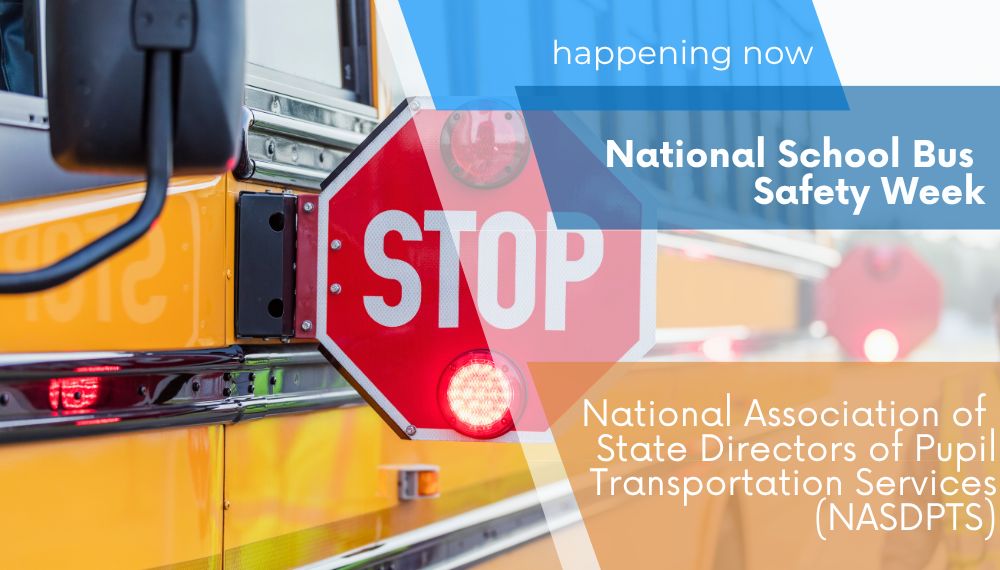
October 19–23 is National School Bus Safety Week, a reminder that keeping students safe is a shared responsibility.

That responsibility extends beyond the school bus driver. School transportation teams, mechanics, administrators, parents, students, and every motorist sharing the road all have a role to play.

For those operating school buses and other student transportation vehicles, safety starts long before the bus pulls away from the curb — with qualified drivers, well-maintained vehicles, proper inspections, and procedures that keep safety at the center of the operation.

And for the rest of us behind the wheel: slow down, stay alert, and give school buses the space they need to safely transport our communities’ most important passengers.

At Lee Trans, we’re proud to recognize the people who help keep students moving safely every day.

#SchoolBusSafetyWeek #SchoolBusSafety #StudentSafety #FleetSafety #TransportationSafety #LeeTrans

A Word from Dawn Davis

Supporting Our Team Through Engagement, Balance, and a Culture That Celebrates People

As October arrives and we begin the transition into the holiday months, it’s a natural time to pause and reflect on the people who keep our work moving forward every day. At Lee Trans, our commitment to employee engagement is not seasonal — it’s a year-round priority — but fall offers a unique moment to reinforce what makes our culture strong.

One of our ongoing goals is to support a workplace where every team member feels valued, connected, and equipped to succeed. That includes maintaining a healthy balance between the demands of client support and the needs of our employees at home and in their personal lives. We know that when people feel supported, they are more confident, more collaborative, and better able to bring their best to the carriers we serve.

Across each department, we continue to focus on:

  • Work–life balance, ensuring workloads are manageable and schedules allow space for personal commitments
  • A safe, welcoming, and enjoyable atmosphere, where communication is open and teamwork comes naturally
  • Opportunities to celebrate successes, both big and small, recognizing achievements that move our mission forward
  • Moments of connection, whether through team events, shared milestones, or simple day-to-day support

As the holiday season approaches, we look forward to honoring the accomplishments of our staff and creating space for meaningful moments together. These celebrations aren’t just traditions – they’re reflections of a culture built on respect, gratitude, and genuine appreciation.

Our employees are the foundation of everything we do, and investing in their well-being remains one of the most important parts of my role. I’m proud of the environment we’ve built and excited for the season ahead, where we will continue to uplift, encourage, and recognize the people who make Lee Trans exceptional.

Wishing each of you a strong start to the fall season and a sense of balance and joy as we head toward the holidays.

 Dawn Davis

Director of Administration

Indigenous Peoples’ Day

Today, we recognize Indigenous Peoples’ Day by honoring the cultures, histories, traditions, and contributions of Indigenous peoples.

May we continue to learn from the past, appreciate the communities and traditions that shape our nation, and recognize the importance of preserving those stories for generations to come.

#IndigenousPeoplesDay #LeeTrans

Learn with Lee Trans

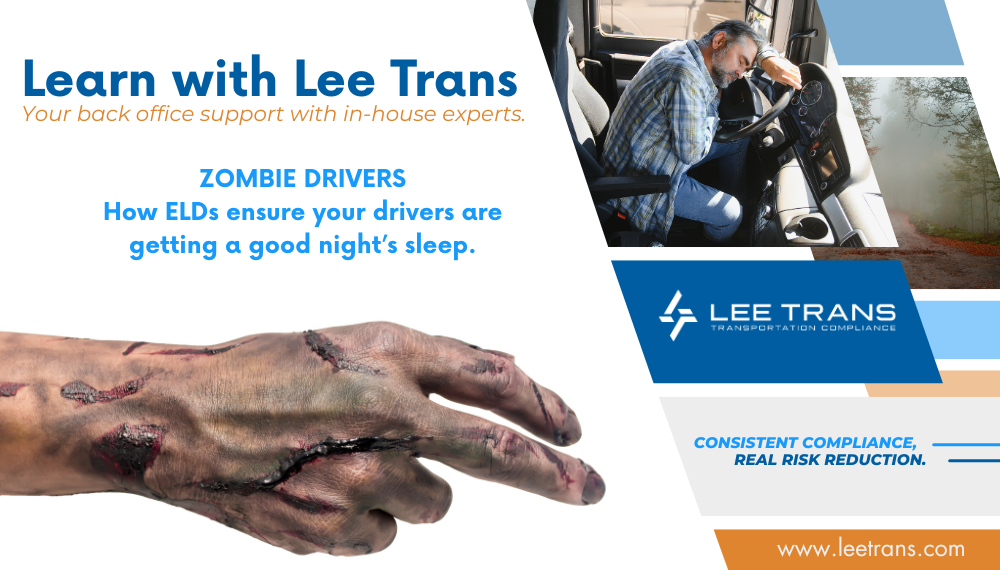
Zombie Drivers: How ELDs Help Protect Rest

We all know a driver can be off-duty without actually being rested.  Hours-of-Service regulations are designed to limit how long drivers can work and drive, with required periods away from duty intended to help drivers remain awake and alert. But there’s an important distinction between having a legally compliant rest period and actually getting restorative sleep.  That’s where the conversation around Electronic Logging Devices gets interesting.

The ELD Knows When You’re Moving

An ELD is designed to record a driver’s Record of Duty Status and automatically capture driving activity. It provides a more objective record of when a vehicle is moving, helping carriers and enforcement officials identify potential Hours-of-Service violations.  What it can’t do is tell you whether a driver spent their off-duty time sleeping.

A driver could be legally off-duty for 10 hours and still get poor-quality sleep, wake repeatedly, handle personal responsibilities, or simply struggle to sleep. The log may show a compliant rest period, but the driver’s level of fatigue isn’t something the ELD can measure.  A clock can measure time. It can’t measure sleep.

Why Accurate Logs Still Matter

That doesn’t make ELDs less important.  Accurate records help establish whether a driver had the opportunity to take the required time away from driving and whether the driver’s schedule complied with applicable HOS requirements.  They also create a record that can be reviewed against other information when questions arise.  If the ELD shows 10 consecutive hours off-duty, but other information suggests the vehicle moved during that period, that discrepancy deserves a closer look.  FMCSA requires carriers to retain Records of Duty Status and supporting documents for six months, and those supporting documents can help verify the accuracy of a driver’s recorded duty status.

Paper Logs Aren’t a Free Pass

The ELD conversation has also resurfaced recently.  In February 2026, the Federation of Professional Truckers requested an exemption that would have allowed covered drivers to choose paper RODS instead of using an ELD. The proposal argued that paper logs could provide an alternative for drivers who maintained accurate records and underwent additional internal oversight.  On September 30, FMCSA denied the request.

FMCSA noted that the ELD requirement is grounded in federal law and concluded that the application did not establish that the proposed exemption would provide an equivalent level of safety.  For carriers subject to the ELD requirement, the takeaway is simple: paper logs have not replaced ELDs.

Limited exceptions already exist, including certain short-haul operations, drivers using paper RODS no more than eight days in a 30-day period, and other specified circumstances.

Compliance Isn’t the Same as Fatigue Management

This brings us back to our “zombie driver.”  A driver can have a perfectly clean log and still be tired.  That’s why a strong safety program needs to look beyond whether the numbers add up. Scheduling, adequate opportunities for sleep, realistic dispatch expectations, communication practices, and recognizing the signs of fatigue all play a role in keeping drivers alert.

The ELD helps establish when a driver is working and when they’re not.  It doesn’t establish how well they slept.

The Learn with Lee Trans Takeaway

Compliance with Hours-of-Service regulations is essential, but compliance should be viewed as a baseline – not the entire fatigue-management strategy.  Use the ELD for what it is designed to do: create an accurate, reliable record of duty status and help identify potential HOS issues.  Then look beyond the log.

Because a driver who is legally rested isn’t necessarily a driver who is well rested.

Learn with Lee Trans

At Lee Trans, our HOS services help carriers review records, identify potential compliance concerns, and better understand how their day-to-day operations align with regulatory requirements.

Every fleet is different, and so are its compliance responsibilities. That’s why each month, our Learn with Lee Trans series explores the regulations, programs, and best practices that help carriers operate with confidence. If there’s a topic you’d like us to cover in a future edition, we’d love to hear from you.

October Anniversaries

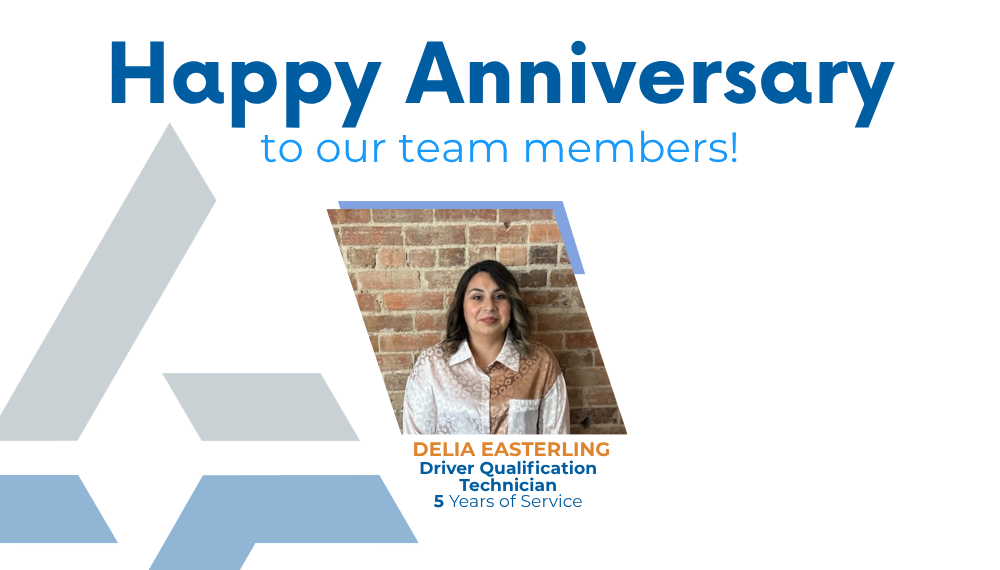
Please join us in celebrating some of our employee milestones this month! Thank you all for your dedication to service and commitment to excellence. We are proud to have you on the team!

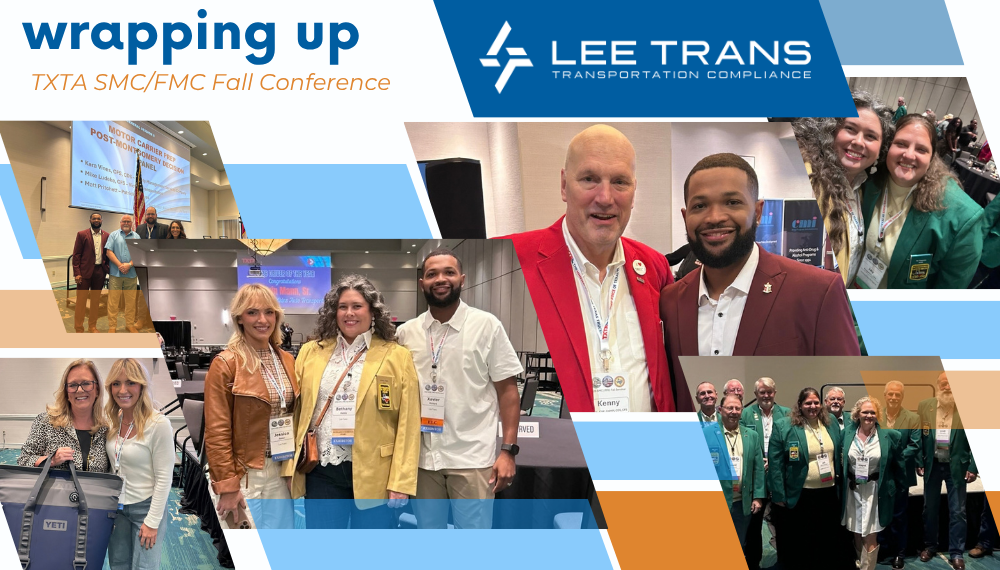
Big thanks to our dear friends at the Texas Trucking Association and the Safety Management Council and Fleet Management Council for hosting another successful fall conference. We were honored to join in the conversation regarding the Montgomery verdict, celebrate our peers’ impacts on our industry, and of course share how we provide consistent compliance and real risk reduction!

Fire Prevention Week

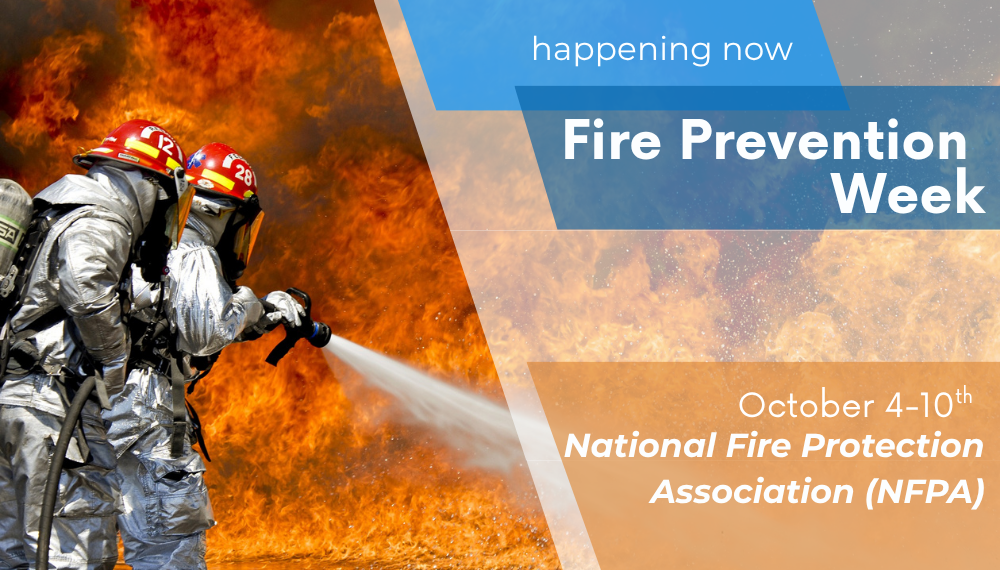
Fire Prevention Week is October 4–10, and this year’s message is especially relevant to today’s fleets: safe charging matters.

As more businesses and fleets incorporate electric vehicles, battery-powered equipment, tools, and other rechargeable technology, understanding lithium-ion battery safety is becoming an important part of fire prevention.

For fleet operators, that means taking a closer look at where and how equipment is charged, how batteries are stored, and whether employees know what to do if a battery shows signs of damage, overheating, or failure.

Fire prevention isn’t just about what happens after a fire starts. It’s about recognizing potential hazards before they become an emergency.

This Fire Prevention Week, take a few minutes to look at the equipment and charging practices throughout your operation. A small safety check today can help prevent a much bigger problem tomorrow.

#FirePreventionWeek #FleetSafety #FireSafety #EVSafety #TransportationSafety #LeeTrans

From our President; Jackie Polk, CTP:
Small improvements, made consistently, can have a tremendous impact on our clients, our coworkers, and our company. And speaking of people who make a difference, I can’t think of a better transition into recognizing our September Employee of the Month, Desiree Lucas! Since returning to Lee Trans, Desiree’s experience, knowledge and dedication have allowed her to quickly make an impact. She willingly takes ownership of whatever is placed before her, whether that means digging deeper to understand a difficult issue, thinking outside the box to find a solution, taking care of a challenging client situation or stepping in to support a coworker. Her nomination specifically noted that Desiree’s willingness and ability to handle whatever comes her way has reduced stress across the entire department and strengthened the team as a whole. In fact, her coworker shared that “her addition to the team actually makes it feel like a team.” I can’t think of a better compliment. Desiree is a great example of how one person’s commitment to doing their best can positively impact our clients, coworkers and company. Congratulations, Desiree, and thank you for everything you do!

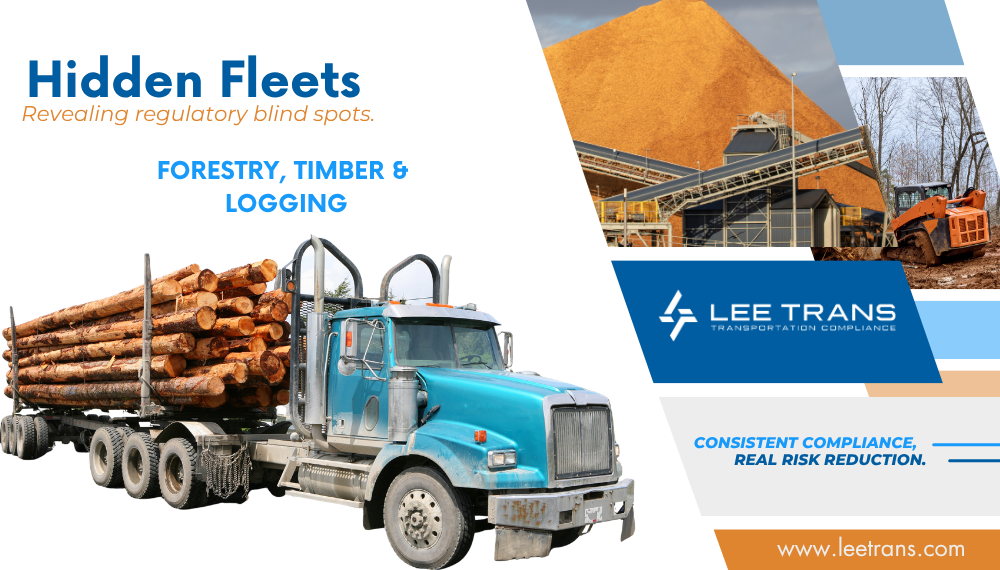
Hidden Fleet Spotlight

Forestry, Timber & Logging Fleets

As summer gives way to fall and the leaves begin to change, we’re reminded of the forests that provide more than beautiful scenery. The forestry and timber industry supports a vast network of products and businesses – from timber harvesting and logging to lumber, paper, construction materials and more.  But behind the finished product is another important part of the operation: transportation.  For businesses whose primary focus is forestry or timber, trucks and trailers may simply be viewed as another piece of equipment needed to get the job done. That can make the transportation side of the operation easy to overlook when considering regulatory requirements.

When Forestry Meets Transportation

Forestry and timber operations can involve some unique transportation considerations. The type of vehicle, its weight and configuration, the commodity being transported, where the vehicle operates and how the trip is conducted can all affect the requirements that apply.  For Texas operators, even vehicle registration may look different. Forestry license plates, commonly referred to as Forestry Tags, are available for qualifying vehicles used in the production and harvesting of timber. But a specialized registration classification doesn’t automatically mean the vehicle or operation is exempt from other applicable motor carrier requirements.  That’s an important distinction:  How a vehicle is registered and how a vehicle is regulated are not always the same thing.

What About Forestry Exemptions?

This is where things can get a little more complicated.  Certain forestry and timber operations may qualify for specific regulatory exemptions or exceptions based on the nature of the operation, the commodity being transported, the vehicle being used or where the transportation occurs.  But exemptions are rarely as broad as simply saying, “It’s a forestry operation, so we’re exempt.”  A carrier should understand which requirement the exemption applies to, the conditions that must be met, and whether other federal or state requirements still apply.  For example, an exemption that affects hours-of-service requirements doesn’t necessarily eliminate requirements related to vehicle maintenance, driver qualification, drug and alcohol testing, registration or other areas of compliance.  Knowing that an exemption exists is only the first step. Understanding its boundaries is where compliance gets more complicated.

Don’t Let the Season Catch You Off Guard

Forestry and timber operations can also be highly seasonal. As demand changes throughout the year, operations may add equipment, change routes, expand into new areas or take on different types of work.  Each change is an opportunity to ask a simple question:  Did anything about our operation change that could change our regulatory requirements?  A new vehicle, a different trailer, a new state of operation or a change in the type of freight being hauled can all warrant another look at the compliance picture.

Look Beyond the Industry Label

Forestry is a great example of why we call these businesses Hidden Fleets.  The company may identify itself as a logging company, timber producer or forest products business – not a motor carrier. But once commercial vehicles become part of the operation, transportation regulations can become part of the business, too.  And there isn’t always a single answer.

The most appropriate requirements depend on the specific operation, not simply the industry it serves.

Know Your Fleet

If your business involves forestry, timber or forest products, fall may be a good time to take a fresh look at the vehicles moving your operation forward.

  • Are your vehicles registered appropriately?
  • Do any forestry-specific provisions apply?
  • Are you relying on an exemption—and do you know exactly what it exempts?
  • Have changes to your operation created new regulatory responsibilities?

The answers may be different from what you expect.

At Lee Trans, we help carriers take a closer look at their specific operations, identify potential regulatory exposure and determine where additional guidance may be needed.  Because sometimes, the regulations hiding in your fleet are the ones you don’t know to look for.

Hidden Fleet Spotlight

At Lee Trans, we work with forestry, timber, and forest products operations that may not realize how their transportation activities can impact their regulatory responsibilities. Through Licensing and Permitting, Asset Management with FleetKeep, Driver Qualification support, Consulting, and compliance guidance, we help organizations better understand their regulatory exposure while keeping their focus where it belongs — keeping their operations moving.