
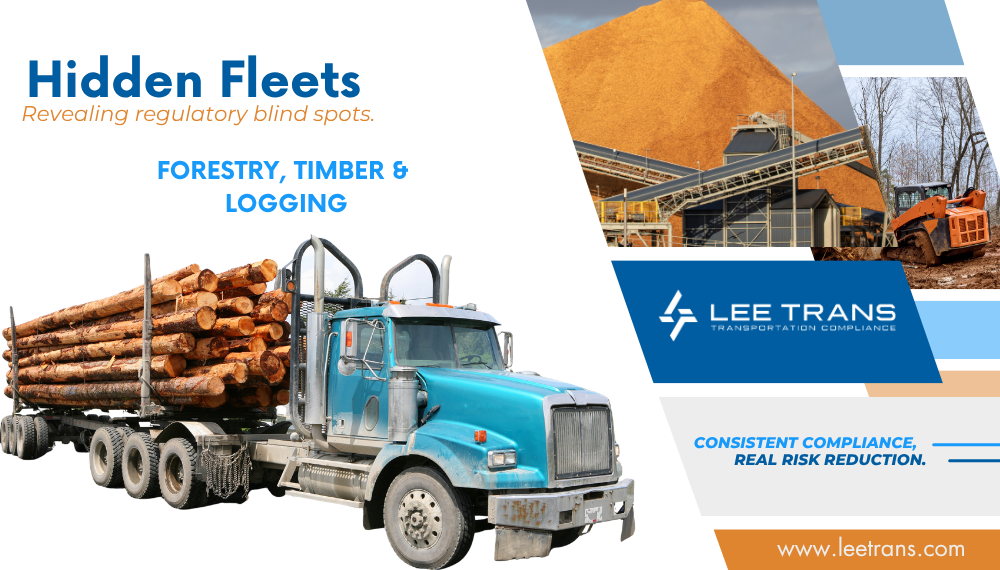
Hidden Fleet Spotlight
Forestry, Timber & Logging Fleets
As summer gives way to fall and the leaves begin to change, we’re reminded of the forests that provide more than beautiful scenery. The forestry and timber industry supports a vast network of products and businesses – from timber harvesting and logging to lumber, paper, construction materials and more. But behind the finished product is another important part of the operation: transportation. For businesses whose primary focus is forestry or timber, trucks and trailers may simply be viewed as another piece of equipment needed to get the job done. That can make the transportation side of the operation easy to overlook when considering regulatory requirements.
When Forestry Meets Transportation
Forestry and timber operations can involve some unique transportation considerations. The type of vehicle, its weight and configuration, the commodity being transported, where the vehicle operates and how the trip is conducted can all affect the requirements that apply. For Texas operators, even vehicle registration may look different. Forestry license plates, commonly referred to as Forestry Tags, are available for qualifying vehicles used in the production and harvesting of timber. But a specialized registration classification doesn’t automatically mean the vehicle or operation is exempt from other applicable motor carrier requirements. That’s an important distinction: How a vehicle is registered and how a vehicle is regulated are not always the same thing.
What About Forestry Exemptions?
This is where things can get a little more complicated. Certain forestry and timber operations may qualify for specific regulatory exemptions or exceptions based on the nature of the operation, the commodity being transported, the vehicle being used or where the transportation occurs. But exemptions are rarely as broad as simply saying, “It’s a forestry operation, so we’re exempt.” A carrier should understand which requirement the exemption applies to, the conditions that must be met, and whether other federal or state requirements still apply. For example, an exemption that affects hours-of-service requirements doesn’t necessarily eliminate requirements related to vehicle maintenance, driver qualification, drug and alcohol testing, registration or other areas of compliance. Knowing that an exemption exists is only the first step. Understanding its boundaries is where compliance gets more complicated.
Don’t Let the Season Catch You Off Guard
Forestry and timber operations can also be highly seasonal. As demand changes throughout the year, operations may add equipment, change routes, expand into new areas or take on different types of work. Each change is an opportunity to ask a simple question: Did anything about our operation change that could change our regulatory requirements? A new vehicle, a different trailer, a new state of operation or a change in the type of freight being hauled can all warrant another look at the compliance picture.
Look Beyond the Industry Label
Forestry is a great example of why we call these businesses Hidden Fleets. The company may identify itself as a logging company, timber producer or forest products business – not a motor carrier. But once commercial vehicles become part of the operation, transportation regulations can become part of the business, too. And there isn’t always a single answer.
The most appropriate requirements depend on the specific operation, not simply the industry it serves.
Know Your Fleet
If your business involves forestry, timber or forest products, fall may be a good time to take a fresh look at the vehicles moving your operation forward.
- Are your vehicles registered appropriately?
- Do any forestry-specific provisions apply?
- Are you relying on an exemption—and do you know exactly what it exempts?
- Have changes to your operation created new regulatory responsibilities?
The answers may be different from what you expect.
At Lee Trans, we help carriers take a closer look at their specific operations, identify potential regulatory exposure and determine where additional guidance may be needed. Because sometimes, the regulations hiding in your fleet are the ones you don’t know to look for.
Hidden Fleet Spotlight
At Lee Trans, we work with forestry, timber, and forest products operations that may not realize how their transportation activities can impact their regulatory responsibilities. Through Licensing and Permitting, Asset Management with FleetKeep, Driver Qualification support, Consulting, and compliance guidance, we help organizations better understand their regulatory exposure while keeping their focus where it belongs — keeping their operations moving.