Independence Day

Today marks the semiquincentennial celebration of our nation—250 years of Independence!

Since 1776, generations of Americans have contributed to a legacy of innovation, perseverance, and service that continues to shape our communities and industries today. As we celebrate this historic milestone, we reflect on the freedoms that allow businesses to grow, families to thrive, and individuals to pursue opportunity.

At Lee Trans, we’re proud to support the fleets, drivers, and transportation professionals who help keep our nation moving. Their dedication reflects the same spirit of hard work and determination that has defined America for two and a half centuries.

As you gather with family and friends this Independence Day, we encourage everyone to celebrate safely and take a moment to appreciate the people and freedoms that make our country strong.

Wishing our clients, partners, and industry peers a safe and happy Fourth of July.

Notice of Office Closure

Please note our office will be closed tomorrow, Friday July 3rd, as we observe Independence Day. We will reopen Monday, July 6th.

Today marks an opportunity to recognize postal workers across the nation. Postal workers are essential to keeping our country connected.

Since 1997 the day has shone a spotlight on the everyday heroes who keep the wheels of communication turning. The roots of the U.S. Postal Service stretch even further back. Founded in 1775 with Benjamin Franklin as the first Postmaster General, the USPS has served as the backbone of communication in America. National Postal Worker Day honors this rich history and the hardworking individuals carrying the legacy forward.

To our friends in the Postal Service – thank you for your dedication and tireless efforts!

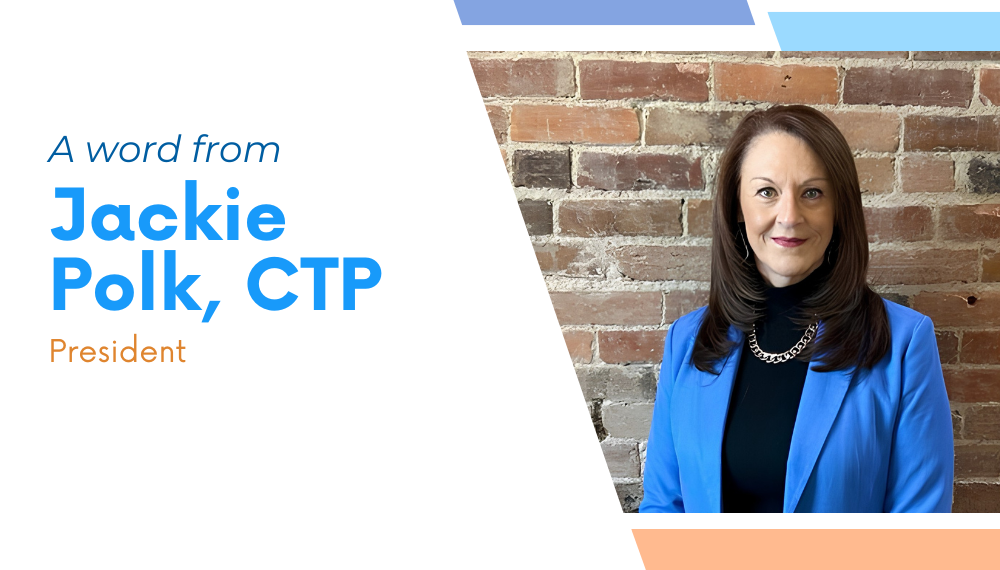
A Word From Jackie Polk

Our Competitive Advantage Has Never Been Technology

The transportation industry has changed dramatically since Lee Trans opened its doors in 1984.

Over the years, we have seen paper files become electronic records, fax machines replaced by portals and APIs, and manual processes transformed by automation.  Today, artificial intelligence is the latest technology changing the way businesses operate.  Like most companies, we are excited about the opportunities these tools provide.  We have invested heavily in technology over the years, developed our own software platforms, and continue looking for ways to improve efficiency and enhance the experience we provide our clients.

But if there is one thing I have learned during my 30 years in this industry, it is that technology is not what makes a company successful.  People do.

The truth is that regulations are available to everyone.  Information is easier to access than it has ever been before.  Technology continues to level the playing field, making many of the same tools available to service providers, competitors, and clients alike.  What technology cannot replace is experience.

When clients call us, they usually are not looking for someone to read a regulation to them.  They are looking for someone who understands their situation and can help them determine what the regulation means for their business.  They want to know what risks they may be facing, what options they have available, and what steps they should take next.  That comes from experience.  It comes from spending years working with carriers of all sizes, navigating audits, helping clients through difficult situations, and seeing firsthand how regulations apply in the real world rather than just on paper.  Just as importantly, it comes from relationships.

At Lee Trans, we have always believed we are in the service business first.  Compliance, licensing, permitting, driver qualification, fuel tax reporting, and all the other services we provide are important, but at the end of the day, those services are delivered by people.

People who answer questions.

People who solve problems.

People who care about the success of the clients they serve.

Our mission statement says it best: “Profitability, by building relationships founded on integrity, meeting needs with a servant’s heart and exceeding expectations in every area of service.”

Those are not just words on a wall.  They influence the way we hire, the way we train, the way we communicate, and the way we serve our clients every day.  They reflect the culture Gene Lee established more than 40 years ago and the values that continue to guide our organization today.

Technology helps us work faster.  Automation helps us handle larger volumes of information.  Artificial intelligence can help us find answers more quickly.  But none of those things can replace a trusted advisor who knows your operation, understands your challenges, and genuinely wants to help you succeed.

As we move forward, we will continue investing in technology.  In fact, we are currently developing a new platform that will modernize many of the tools we use to support our clients.  We will continue looking for better systems, better processes, and better ways to deliver our services.  But we will never lose sight of what has made us successful for more than four decades – Our people.

Because when everyone has access to the same information, service becomes the differentiator.  When technology becomes commonplace, relationships become even more valuable.  And in an industry built on trust, experience and integrity still matter.

They mattered in 1984.

They matter today.

And I believe they will matter for decades to come.

From our President; Jackie Polk, CTP:

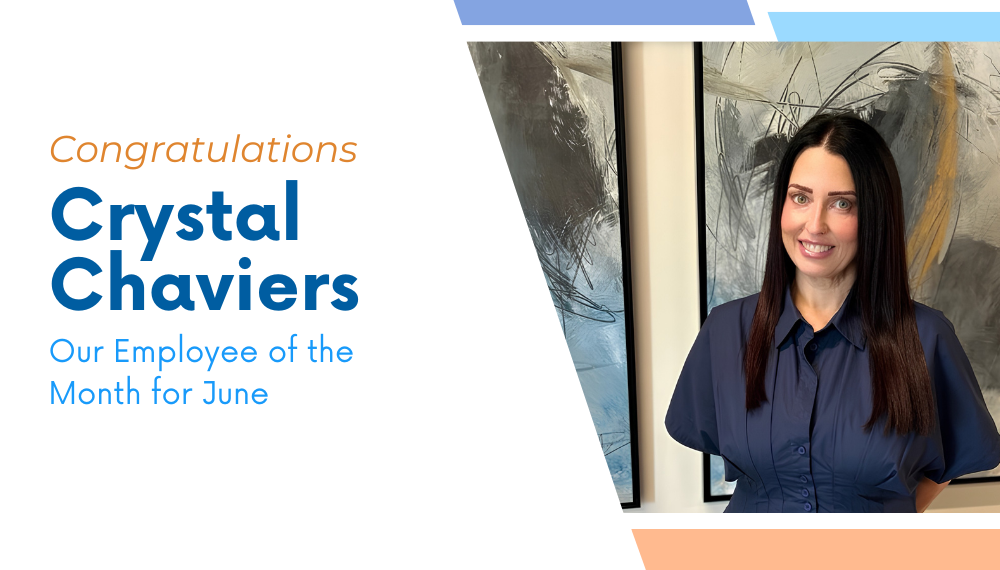
This month, we are proud to recognize Crystal Chaviers as our Employee of the Month. Over the years, Crystal has worked in our Driver Qualification, Licensing & Permitting, and Client Service departments. In every role she has held, she has consistently risen to the top by not only mastering the regulations, systems, and processes required to do the job, but by finding ways to improve them. Crystal is not only intelligent, but is also fiercely loyal, hardworking, and determined. She is someone you can always count on to follow through and get the job done. Crystal now leads our Client Service Team. She has done an outstanding job bringing the group together, strengthening the teamwork and improving processes that have allowed us to move from being reactive to being proactive. Crystal’s contributions have had a lasting impact on our company, our employees and our clients. We are fortunate to have her as part of the Lee Trans family and this recognition is well deserved. Congratulations, Crystal – as your nominator put it, you’re simply “the bomb.com.”

Hidden Fleet Series

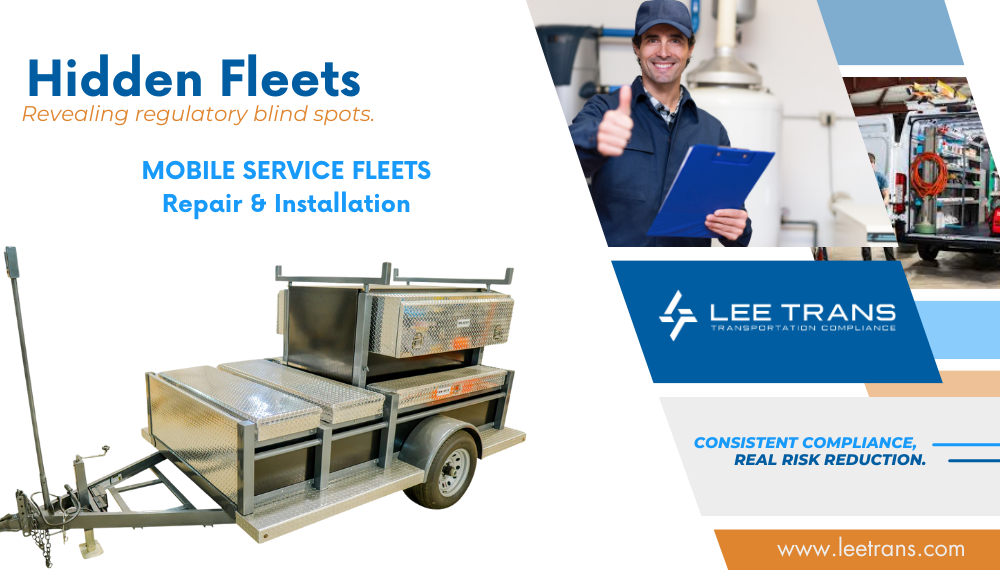
Mobile Service Fleets: The Worksites That Move With You

Mobile Service Fleets don’t always look like fleets at all.  They aren’t traditional freight carriers, and they don’t usually operate from a terminal-to-terminal model. Instead, they function as rolling service operations—bringing tools, equipment, and technical expertise directly to the job site.  That mobility is exactly what makes them easy to overlook from a compliance standpoint.

What a Mobile Service Fleet Really Is

At their core, Mobile Service Fleets are built to perform work in the field rather than transport freight. These units may support maintenance, repair, installation, or emergency response operations across local or interstate regions.

A single vehicle often functions as a fully equipped mobile shop, carrying:

  • Heavy tools and repair equipment
  • Replacement parts and consumables
  • Diagnostic or powered systems
  • Safety and specialty field gear

To expand capacity, many operations also use trailers to transport additional parts, oversized equipment, or job-specific materials.

Why These Vehicles Don’t Stay “Light”

Although they may appear similar to standard vans or service trucks, Mobile Service Fleets often operate at significantly higher weights due to their configuration.  Common contributors include:

  • Built-in tool storage systems and racks
  • Compressors, welders, or generators
  • Full inventories of repair parts
  • Trailer loads for extended job assignments

Once fully equipped, these units can quickly change classification considerations and impact licensing, inspection, and driver qualification requirements.  The key compliance risk is simple: the vehicle looks standard, but the operation is not.

The Role of Trailers in Field Operations

Trailers are often what make mobile service operations scalable.  They allow teams to:

  • Stage parts for multiple service stops
  • Carry specialized or oversized equipment
  • Support emergency response deployments
  • Reduce downtime between job sites

But they also introduce added regulatory requirements, including:

  • Combined weight rating considerations (GVWR/GCVWR)
  • Inspection and maintenance obligations
  • Load securement standards
  • Potential CDL and endorsement requirements

When trailers are added, the operation shifts from a single service unit to a combination vehicle system under DOT oversight.

Interstate Operations Add Another Layer

Many Mobile Service Fleets operate across state lines to support regional contracts or multi-state customers. That mobility introduces additional compliance considerations such as:

  • USDOT registration requirements
  • Driver qualification file consistency
  • Hours-of-Service tracking for technicians
  • Multi-state enforcement variability
  • Maintenance and inspection documentation across jurisdictions

Unlike traditional freight operations, routing is often driven by customer demand rather than predictable lanes, which can make compliance harder to standardize.

Why This Fleet Type Gets Overlooked

Mobile Service Fleets are frequently missed in compliance conversations because they don’t fit the traditional “carrier” profile.  But functionally, they still operate as commercial fleets; often with:

  • Heavy equipment loads
  • Combination vehicles (with trailers)
  • Interstate travel exposure
  • Safety-sensitive roadside or field operations

They are hidden not because they are small, but because they don’t look like what people expect a fleet to be.

Mobile Service Fleets sit at the intersection of transportation, logistics, and field operations. Their ability to move work directly to the customer is what makes them valuable and what makes them complex from a compliance perspective.  As part of our Hidden Fleet series, we continue to highlight the operations that don’t always resemble traditional trucking, but still fall squarely under DOT expectations and oversight.

At Lee Trans, we help carriers identify and manage every part of their fleet footprint – including the ones hiding in plain sight.  For more information about how we evaluate fleets and their regulatory exposure, contact us at sales@leetrans.com!

We’re proud to highlight our partnership with Holman.

For more than a century, Holman has helped organizations maximize the value of their fleet investments through fleet management, vehicle acquisition, maintenance, licensing, driver services, and strategic fleet solutions. Their commitment to “Driving What’s Right” and focus on long-term customer success align closely with the values we bring to every client relationship.

Together, our organizations help fleets navigate both operational and regulatory challenges. While Holman supports the vehicle lifecycle from acquisition to remarketing, Lee Trans provides compliance expertise, consulting, driver qualification management  and regulatory support to help keep fleets moving safely and efficiently.

Strong partnerships create stronger fleets. By combining industry-leading fleet management solutions with practical compliance support, we’re able to help organizations focus on what they do best while maintaining confidence in their operations.

Interested in learning more about our affiliate partnerships and integrated fleet solutions? Connect with our Sales team to start the conversation.

Learn with Lee Trans

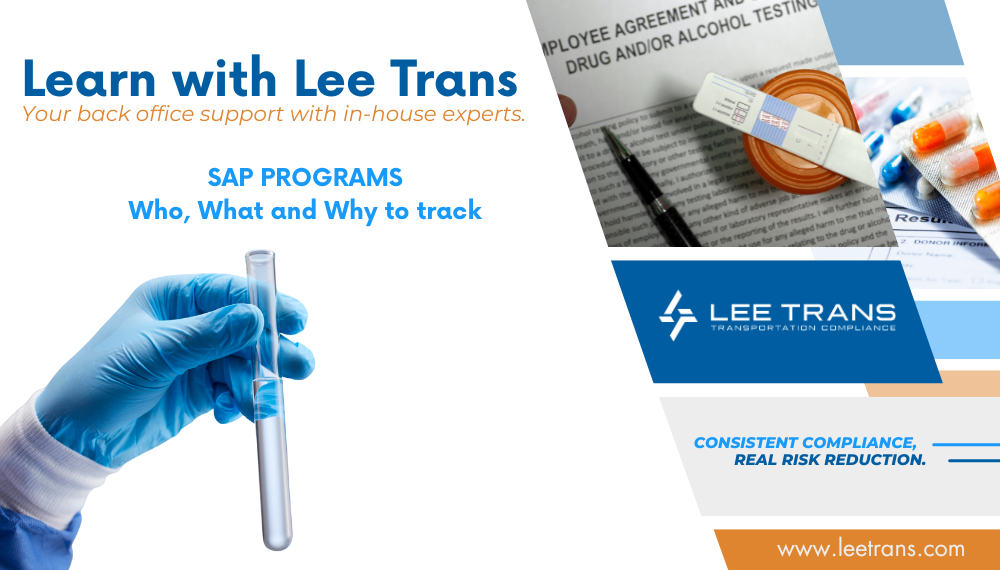
SAPs – Who, What and Why

Safety-sensitive transportation employees play a critical role in protecting the traveling public. When a DOT-regulated driver violates federal drug and alcohol testing regulations, the Department of Transportation requires a structured Return-to-Duty process before that individual can resume safety-sensitive functions. At the center of this process is the Substance Abuse Professional (SAP). Understanding the role of the SAP, the responsibilities of the driver, and the obligations of the employer is essential for maintaining compliance with federal regulations and ensuring roadway safety.

What is a Substance Abuse Professional (SAP)?

A Substance Abuse Professional (SAP) is a licensed or certified professional who evaluates DOT-regulated drivers who have violated drug and alcohol program regulations. SAPs are responsible for determining the appropriate course of education and/or treatment and for establishing follow-up testing requirements before a driver may return to safety-sensitive duty.

Under 49 CFR Part 40, the SAP serves as an independent authority focused solely on public safety and compliance—not the employer or the driver.

What Triggers the SAP Process?

A SAP evaluation is required when a DOT-regulated driver violates drug and alcohol testing regulations, including:

  • A positive drug test result
  • An alcohol test result of 0.04 or greater
  • A refusal to submit to required DOT testing
  • Any other violation defined under DOT agency regulations

Once a violation occurs, the driver must be immediately removed from safety-sensitive functions and cannot return until the SAP process is completed in full.

Follow-Up Testing Requirements (SAP-Directed)

Under 49 CFR Part 40, the SAP is responsible for establishing a written follow-up testing plan once a driver successfully completes recommended education or treatment.

Key requirements include:

  • A minimum of six unannounced follow-up tests within the first 12 months after Return-to-Duty
  • Testing may include drugs, alcohol, or both depending on the violation
  • Follow-up testing may continue for 1 to 5 years
  • The SAP determines frequency, timing, and duration beyond the minimum requirements

Follow-up testing is always unannounced and must be conducted outside of any employer-controlled testing schedules.

Why the SAP Process Matters

The SAP process exists to balance rehabilitation opportunities with public safety. DOT-regulated drivers operate commercial vehicles where impairment poses significant risk to the public.  By requiring a structured evaluation, treatment pathway, and follow-up testing plan, the DOT ensures:

  • Consistent national standards
  • Accountability for drivers returning to safety-sensitive work
  • Employer compliance with federal regulations
  • Ongoing monitoring to reduce recidivism risk

The Driver, Employer and Substance Abuse Professional are all responsible for key steps in the SAP and Return-to-Duty process:

Driver Responsibilities:

  • Contacting and completing an evaluation with a qualified SAP
  • Following all recommended education and/or treatment requirements
  • Completing any required follow-up SAP evaluations
  • Successfully passing a Return-to-Duty test before resuming safety-sensitive work
  • Complying with all SAP-directed follow-up testing and aftercare requirements

Employer Responsibilities:

  • Obtaining the DOT-required Drug and Alcohol Statement from applicants, including disclosure of prior violations and completion status of any Return-to-Duty process
  • Conducting a Clearinghouse Pre-Employment Full Query before allowing a CDL driver to perform safety-sensitive functions
  • Reporting drug and alcohol violations, including refusals, to the FMCSA Drug and Alcohol Clearinghouse
  • Providing drivers with a list of qualified SAPs following a violation
  • Ensuring Return-to-Duty testing is completed before reinstating safety-sensitive duties
  • Implementing all SAP-directed follow-up testing requirements
  • Reporting successful completion of Return-to-Duty and follow-up testing requirements to the Clearinghouse within required timelines
  • Employers are responsible for ensuring follow-up testing is completed exactly as prescribed and may not substitute company testing programs for SAP-directed testing.

SAP Responsibilities:

  • Conducting a face-to-face initial assessment and clinical evaluation
  • Recommending appropriate education and/or treatment
  • Conducting a follow-up evaluation after completion of required steps
  • Determining whether the driver has successfully complied with recommendations
  • Establishing a written follow-up testing plan
  • Providing written documentation to the employer regarding eligibility for Return-to-Duty testing

A DOT drug or alcohol violation does not automatically end a driver’s career, but it does trigger a highly structured federal process designed to protect public safety and support recovery where appropriate.

Substance Abuse Professionals provide the independent clinical judgment required to guide drivers through education or treatment and establish the safeguards necessary for a safe return to duty. Employers and drivers each carry defined responsibilities, and compliance with each step of the SAP process ensures both regulatory adherence and safer roads for everyone.

At Lee Trans we help Motor Carriers find Substance Abuse Professionals, help coordinate the SAP testing cycles, and report to the Clearinghouse as a c/TPA provider.  For more information on our SAP and Drug/Alcohol testing programs please contact sales@leetrans.com!

English Proficiency Requirement
Executive Order Issued April 29, 2025

This week President Trump has signed an Executive Order; Enforcing Commonsense Rules of the Road for America’s Truck Drivers.  This order directs the Department of Transportation (USDOT) to reinstate stronger enforcement of existing federal regulations requiring commercial truck drivers to demonstrate English language proficiency. The directive authorizes federal and state roadside inspectors place drivers out of service if they cannot adequately meet these standards.  The White House framed this move as an effort to enhance roadway safety, improve operational efficiency and reinforce shared civic expectations.

Regulatory History

The English proficiency requirement was originally introduced in 1937 under 49 CFR §391.11(b)(2); which states drivers must be able to “read and speak the English language sufficiently to converse with the general public, understand highway traffic signs and signals, respond to official inquiries, and make entries on reports and records.” Enforcement of this regulation previously allowed inspectors to place drivers out of service for insufficient English skills, impacting over 4,000 drivers in 2014.

Later that year, however, the Commercial Vehicle Safety Alliance (CVSA), in coordination with FMCSA, issued new guidance instructing inspectors not to place drivers out of service solely based on language limitations. In 2016, FMCSA formally ended English proficiency interviews during roadside inspections. Compliance was permitted through the use of interpreting services, I-Speak cards, cue cards, and mobile apps.

A resurgence of the issue occurred last month when a video circulated showing a truck driver in Arkansas being required to read and write during a roadside inspection under Arkansas Act 604, signed into law on April 14. The state law mandates English proficiency and classifies improper documentation as a felony for foreign-domiciled drivers. Penalties range from a $500 fine for the first offense to $1,000 for repeat offenses.

Industry Response

Organizations like the Owner-Operator Independent Drivers Association (OOIDA) have expressed strong support for the reinstated enforcement. Citing the importance of clear communication between drivers, law enforcement, and the public, OOIDA emphasized the need to minimize misunderstandings that can delay inspections or complicate emergency situations.

OOIDA President Todd Spencer stated:

“Basic English skills are essential for reading critical road signs, understanding emergency instructions, and interacting with law enforcement. Road signs save lives—but only when they’re understood. That’s why OOIDA petitioned the Commercial Vehicle Safety Alliance earlier this year to reinstate English proficiency as an out-of-service violation.”

In contrast, some industry observers have expressed concern that the renewed focus on language proficiency distracts from more pressing safety issues. A recent FreightWaves article noted that while English fluency is relevant, it may not significantly address root causes of crashes or improve overall fleet safety.

Among ongoing concerns cited by safety advocates:

  • Lack of mandatory continuous license monitoring across fleets.
  • Thirteen states still permit new teen drivers to obtain licenses without behind-the-wheel training, potentially allowing inadequately trained individuals to pursue CDL licensure later.
  • Distracted driving continues to rise, outpacing federal regulatory response.
  • Drug and alcohol testing faces ongoing enforcement inconsistencies, particularly regarding the adoption of hair follicle testing.


CVSA Recommendations Under Review

The Commercial Vehicle Safety Alliance is considering three proposals, set to be reviewed by the Executive Committee this week:

  • Reinstating out-of-service orders for drivers who cannot respond effectively to official inquiries in English.
  • Petitioning FMCSA to revise §391.11(b)(2) to explicitly list English proficiency as an out-of-service condition.
  • Requiring uniform English-language CDL testing nationwide. (Currently, some states offer the written CDL exam in alternate languages.)

What to Expect

Section 3 of the Executive Order directs the Secretary of Transportation, through the FMCSA Administrator, to rescind the 2016 guidance within 60 days and replace it with new instructions for enforcement. These updates are expected to address changes to roadside inspection procedures, violation penalties, and onboarding standards for motor carriers.

Driver Shortage Impact

According to the American Trucking Associations (ATA), the U.S. is facing a driver shortage of approximately 80,000 in 2025. That number is expected to reach 115,000 by year-end and 160,000 by 2030. To meet demand, the industry needs to add around 110,000 new drivers annually. Any new regulatory enforcement could further impact recruitment and retention, particularly among non-native English speakers.

Who Will Be Affected?

Drivers regulated by FMCSA are already subject to strict background checks, drug and alcohol testing, and physical exams. The reinstated enforcement could especially impact:

  • International Drivers: Immigration advocacy groups like Boundless Immigration advise employers to review practices for H-2B or EB-3 visa holders and consider English-language training to support compliance.
  • Drivers with Speech Disorders: Conditions like stuttering, aphasia, or dysarthria may interfere with roadside evaluations despite not affecting driving ability.
  • Drivers with Learning Disabilities: Those with dyslexia, auditory processing disorders, or language-based challenges may be disproportionately affected.
  • Drivers Using English as a Second Language: Nearly 68 million U.S. residents speak a language other than English at home, per the U.S. Census. A significant percentage of truck drivers fall into this demographic.

Why Now?

In the Executive Order, President Trump stated:

“Proficiency in English, which I designated as our official national language in Executive Order 14224 of March 1, 2025, should be a non-negotiable safety requirement for professional drivers. This is common sense.”

U.S. Transportation Secretary Sean P. Duffy added:

“A driver who cannot sufficiently read or speak English—and understand road signs—is unqualified to drive a commercial motor vehicle in America. This commonsense standard should have never been abandoned.”

How to Prepare

Motor carriers should proactively review their onboarding, training, and compliance programs, particularly for foreign-born or ESL drivers.

Down the Road

Stay informed on expected FMCSA guidance regarding inspection protocols and violation procedures. LTS will provide updates as more information becomes available.

How LTS can help

Lee Trans supports carriers through driver onboarding, file maintenance, compliance consulting, and more. We can help ensure your fleet is prepared for upcoming changes.

Contact Sales@leetrans.com for more information.

Throwback Thursday!  Last quarter our friends at Lonestar Hazmat walked away with a YETI cooler at the Texas Trucking Associations Spring Safety Management Council Conference.  Congratulations to Bryli Lee and thank you to all those that participated!

#winnerwinner