
Hidden Fleet Spotlight
Landscaping & Grounds Services
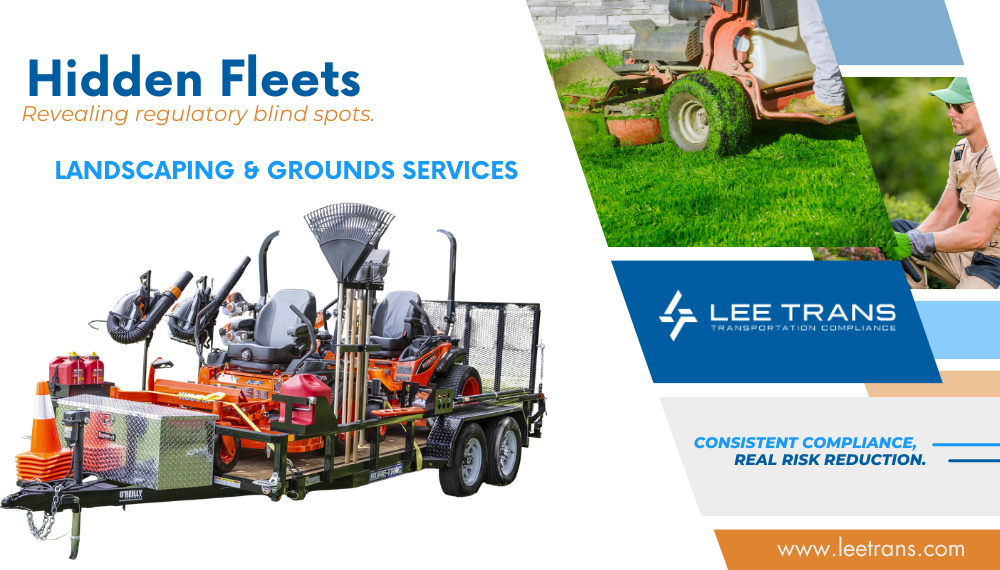
When most people picture a regulated motor carrier, they envision an over-the-road tractor-trailer hauling freight across the country. Landscaping companies rarely come to mind. Yet many landscaping and grounds maintenance businesses operate vehicles that may fall under DOT regulations. From dump trucks and stake-bed trucks to equipment trailers carrying skid steers, mowers, and other heavy equipment, these fleets often exceed federal or state thresholds without realizing transportation regulations may apply. For many organizations, transportation is simply a means to reach the jobsite, not the primary business. That makes landscaping one of the many “hidden fleets” operating in industries outside traditional trucking.
More Than Just a Pickup Truck
As landscaping companies grow, so do their transportation responsibilities. Larger trucks, enclosed trailers, and heavier equipment can increase a vehicle’s Gross Vehicle Weight Rating (GVWR) or Gross Combination Weight Rating (GCWR), potentially triggering additional regulatory requirements depending on how and where the fleet operates. The truck may only get your crew to the jobsite, but from a regulatory standpoint, it may be one of the most important pieces of equipment you own. Whether operating under federal regulations or state-specific transportation codes, understanding vehicle classifications is an important first step in determining compliance responsibilities.
Seasonal Work Creates Unique Challenges
Landscaping operations often experience significant seasonal fluctuations. Temporary employees, changing crews, storm response work, and increased equipment movement can create additional compliance challenges throughout the year. Drivers may spend most of their day performing landscaping services rather than driving, making it easy to overlook transportation requirements such as Driver Qualification, vehicle inspections, or Hours of Service when applicable.
Emergency Response vs. Routine Cleanup
Natural disasters frequently bring landscaping and tree service companies into emergency response efforts. Under certain circumstances, emergency relief operations may qualify for temporary regulatory relief or exemptions intended to help restore essential services following hurricanes, tornadoes, floods, and other disasters. These provisions are generally designed to support activities that protect life or property or restore critical infrastructure such as electrical, water, sewer, communications, and other essential utilities.
However, those exemptions are often misunderstood. Once emergency conditions subside or when work involves debris removal, landscaping restoration, or general cleanup that is not directly supporting the restoration of essential services, the temporary relief may no longer apply. At that point, normal regulatory requirements typically resume. Understanding where emergency exemptions begin and end is essential to maintaining compliance while supporting recovery efforts.
Staying Organized Year-Round
Many landscaping companies focus on maintaining equipment, scheduling crews, and serving customers. Transportation compliance often becomes just one of many responsibilities competing for attention. Developing organized systems for vehicle records, driver qualification documentation, asset tracking, and fleet maintenance helps reduce administrative burden while supporting safer operations throughout the year.
Hidden Fleet Spotlight
At Lee Trans, we work with landscaping companies and grounds maintenance organizations that never expected transportation regulations to apply to their operations. Through Consulting, Driver Qualification support, Asset Management with FleetKeep, Licensing and Permitting, and compliance guidance, we help organizations better understand their regulatory exposure while keeping their focus where it belongs – serving their customers.