
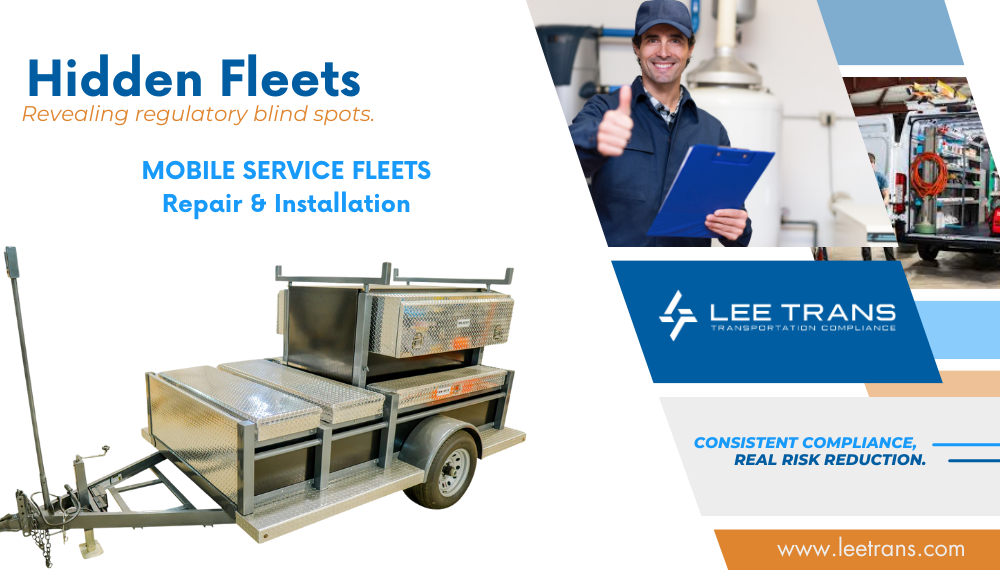
Hidden Fleet Series
Mobile Service Fleets: The Worksites That Move With You
Mobile Service Fleets don’t always look like fleets at all. They aren’t traditional freight carriers, and they don’t usually operate from a terminal-to-terminal model. Instead, they function as rolling service operations—bringing tools, equipment, and technical expertise directly to the job site. That mobility is exactly what makes them easy to overlook from a compliance standpoint.
What a Mobile Service Fleet Really Is
At their core, Mobile Service Fleets are built to perform work in the field rather than transport freight. These units may support maintenance, repair, installation, or emergency response operations across local or interstate regions.
A single vehicle often functions as a fully equipped mobile shop, carrying:
- Heavy tools and repair equipment
- Replacement parts and consumables
- Diagnostic or powered systems
- Safety and specialty field gear
To expand capacity, many operations also use trailers to transport additional parts, oversized equipment, or job-specific materials.
Why These Vehicles Don’t Stay “Light”
Although they may appear similar to standard vans or service trucks, Mobile Service Fleets often operate at significantly higher weights due to their configuration. Common contributors include:
- Built-in tool storage systems and racks
- Compressors, welders, or generators
- Full inventories of repair parts
- Trailer loads for extended job assignments
Once fully equipped, these units can quickly change classification considerations and impact licensing, inspection, and driver qualification requirements. The key compliance risk is simple: the vehicle looks standard, but the operation is not.
The Role of Trailers in Field Operations
Trailers are often what make mobile service operations scalable. They allow teams to:
- Stage parts for multiple service stops
- Carry specialized or oversized equipment
- Support emergency response deployments
- Reduce downtime between job sites
But they also introduce added regulatory requirements, including:
- Combined weight rating considerations (GVWR/GCVWR)
- Inspection and maintenance obligations
- Load securement standards
- Potential CDL and endorsement requirements
When trailers are added, the operation shifts from a single service unit to a combination vehicle system under DOT oversight.
Interstate Operations Add Another Layer
Many Mobile Service Fleets operate across state lines to support regional contracts or multi-state customers. That mobility introduces additional compliance considerations such as:
- USDOT registration requirements
- Driver qualification file consistency
- Hours-of-Service tracking for technicians
- Multi-state enforcement variability
- Maintenance and inspection documentation across jurisdictions
Unlike traditional freight operations, routing is often driven by customer demand rather than predictable lanes, which can make compliance harder to standardize.
Why This Fleet Type Gets Overlooked
Mobile Service Fleets are frequently missed in compliance conversations because they don’t fit the traditional “carrier” profile. But functionally, they still operate as commercial fleets; often with:
- Heavy equipment loads
- Combination vehicles (with trailers)
- Interstate travel exposure
- Safety-sensitive roadside or field operations
They are hidden not because they are small, but because they don’t look like what people expect a fleet to be.
Mobile Service Fleets sit at the intersection of transportation, logistics, and field operations. Their ability to move work directly to the customer is what makes them valuable and what makes them complex from a compliance perspective. As part of our Hidden Fleet series, we continue to highlight the operations that don’t always resemble traditional trucking, but still fall squarely under DOT expectations and oversight.
At Lee Trans, we help carriers identify and manage every part of their fleet footprint – including the ones hiding in plain sight. For more information about how we evaluate fleets and their regulatory exposure, contact us at sales@leetrans.com!